
The Indian mutual fund industry has hit staggering new milestones in early 2026. Monthly Systematic Investment Plan (SIP) inflows have surged to nearly ₹30,000 crore, pushing total industry Assets Under Management (AUM) past the monumental ₹80 Lakh Crore mark.
But beneath these headline numbers, a quiet, ruthless revolution is taking place. Domestic investors are waking up to the math of compounding, firing their highly paid, active fund managers, and migrating their wealth into passive index funds and ETFs.
As of April 2026, passive AUM in India has exploded to nearly ₹15 Lakh Crore—up from a mere ₹1.63 Lakh Crore in 2020. This is not a trend; it is a structural shift in how smart money builds wealth. Here is why chasing “alpha” is costing you millions, and why automating a low-cost passive strategy is the ultimate financial flex.
The SPIVA Reality Check: The Illusion of Outperformance
The traditional mutual fund pitch relies on the myth of the “star fund manager”—a financial genius who can consistently beat the market. The hard data tells a very different story.
According to S&P Global’s rigorous SPIVA (S&P Indices Versus Active) India Scorecards, the vast majority of active fund managers are simply failing to do their one job. Recent data shows that a staggering 81.5% of active large-cap funds failed to beat their benchmark.
Worse still is the industry’s hidden secret: survivorship bias. Over a 10-year horizon, nearly 20% of large-cap funds and 30% of mid-and-small-cap funds are quietly merged or liquidated due to poor performance. When asset management companies market their “category averages,” they conveniently erase these dead funds from the record, artificially inflating the perceived success rate of active management.
The Devastating Drag of Expense Ratios
When you focus on living a rich, automated life, you quickly realize that what you do not pay is just as important as what you earn.
Active mutual funds typically charge base expense ratios between 1.00% and 1.50% to cover the costs of analysts, marketing, and excessive trading. A passive index fund, especially under the new 2026 SEBI regulations, caps these base costs at a fraction of a percent (often as low as 0.10% to 0.30%).
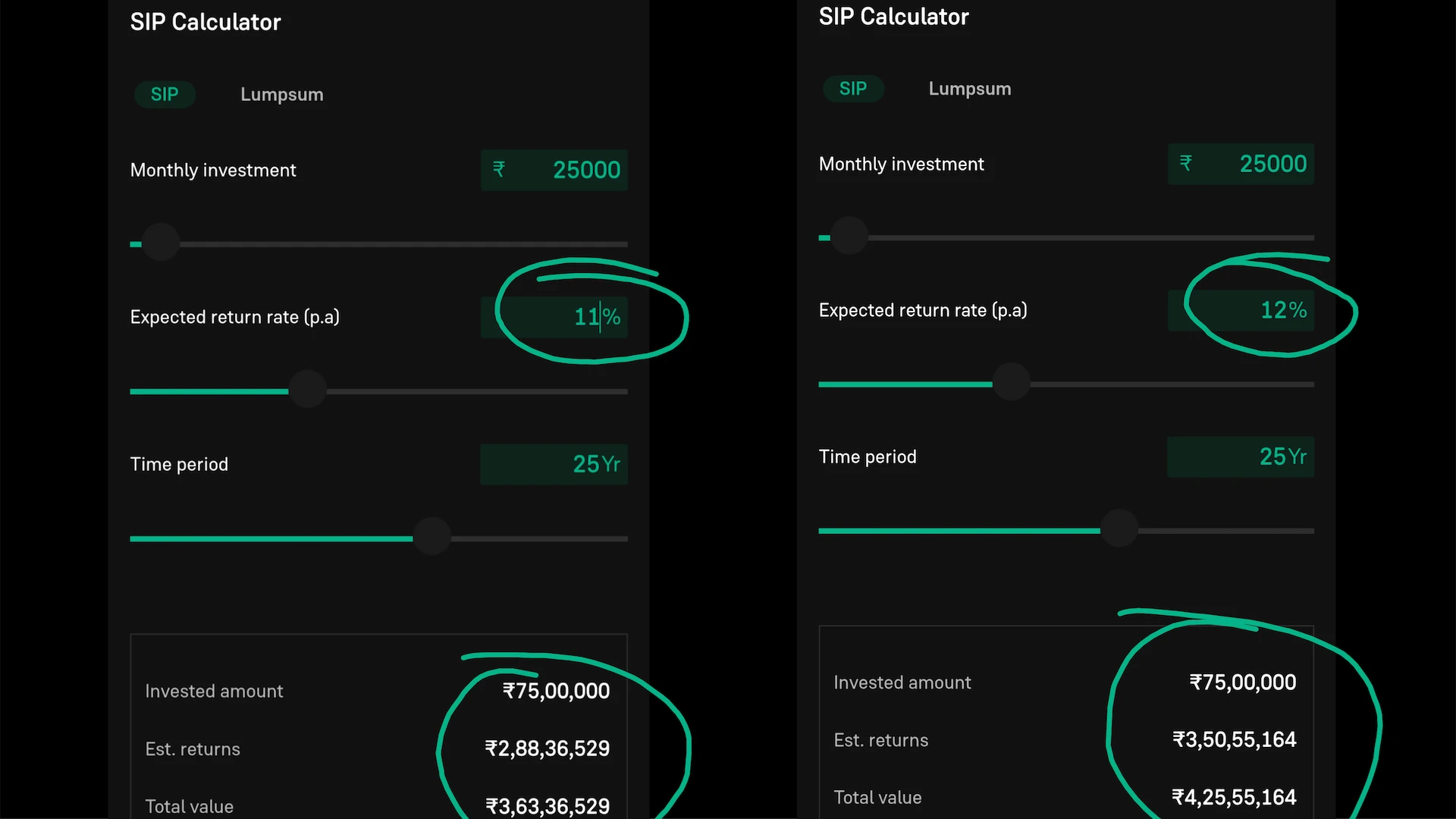
While a 1% difference sounds negligible on paper, it is devastating over a 20-year investing horizon. A 1% fee on a steadily compounding ₹20,000 monthly SIP can siphon away upwards of ₹30 Lakhs to ₹40 Lakhs from your final retirement corpus. You are taking 100% of the market risk, while the fund manager takes a guaranteed cut of your wealth, regardless of whether they beat the index or not.
The Strategy: Automate Your Wealth and Ignore the Noise
The financial media industry thrives on anxiety. They want you tweaking your portfolio, chasing last year’s top-performing thematic fund, and reacting to every minor market dip.
True wealth generation in 2026 is boring, cheap, and entirely automated.
- Own the Market: Instead of trying to find the needle in the haystack, buy the whole haystack. A simple, low-cost Nifty 50 or Nifty 500 index fund guarantees you capture the broader economic growth of India without manager bias.
- Ruthlessly Cut Costs: Audit your portfolio and immediately halt SIPs into active large-cap funds that have consistently trailed their benchmark over a 3- to 5-year period.
- Automate the System: Set your SIPs to trigger the day after your salary hits your account. Do not look at the market. Do not try to time the dips. Let the system run flawlessly in the background while you focus your energy on increasing your earning potential.
The era of paying a premium for underperformance is over. Take control of your expense ratios, automate your investments, and let the market do the heavy lifting for you.

Leave a Reply
You must be logged in to post a comment.