
“Be fearful when others are greedy, and greedy when others are fearful.”
Every investor has heard Warren Buffett’s famous quote. Yet, when the market crashes and headlines scream about economic collapse, most mutual fund investors panic and stop their SIPs. Conversely, when the market is hitting all-time highs and euphoria sets in, they rush to deploy lump-sum cash at peak valuations.
To break this cycle of emotional investing, you need a data-driven framework. Enter the Market Mood Index (MMI) and the Fear and Greed Index.
Here is exactly how you can use market sentiment indicators to optimize your mutual fund portfolio, lower your average purchase cost, and boost your long-term alpha.
1. Decoding Market Sentiment Indicators
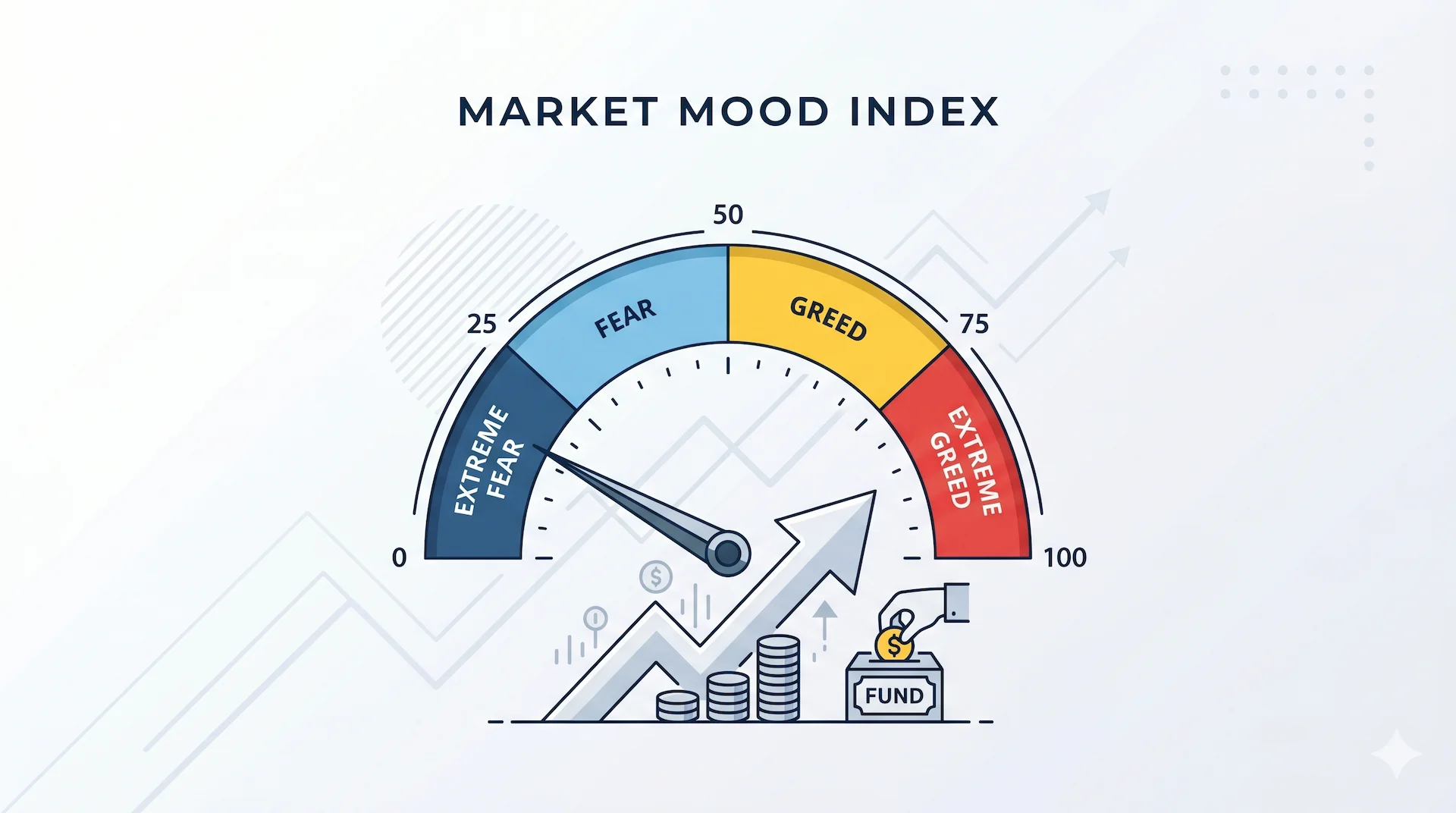
Market sentiment indicators aggregate various data points—like market volatility, momentum, safe-haven demand, and junk bond demand—into a single gauge that tells you exactly how the crowd is feeling.
These indicators typically operate on a scale from 0 to 100, categorized into four distinct zones:
- Extreme Fear (0-25): The market is panic-selling. Assets are heavily discounted.
- Fear (25-50): Investors are anxious, and downward pressure remains.
- Greed (50-75): Confidence is high, and buyers are driving up valuations.
- Extreme Greed (75-100): Euphoria has taken over. The market is likely overbought and due for a correction.
2. The “SIP Booster” Strategy
A Systematic Investment Plan (SIP) is brilliant because it automates your investments and enforces discipline. However, you can use the market mood to optimize how you deploy extra capital.
Instead of randomly investing your annual bonus or spare cash, keep a “war chest” (a liquid fund or high-yield savings account). Deploy this cash strategically based on the sentiment index:
| Sentiment Zone | Action Plan for Mutual Fund Investors | Rationale |
| Extreme Fear | Aggressive Buy. Deploy 50% to 75% of your spare cash into your core equity index funds. | You are buying heavily discounted units. This is where wealth is made. |
| Fear | Accumulate. Continue regular SIPs. Consider a 10-20% top-up on your equity SIPs. | The market is cooling off, offering better valuations than the historical average. |
| Greed | Hold. Stick to your standard SIPs. Do not deploy extra lump-sum cash into equity. | Valuations are stretching. It is better to let your existing automated investments run. |
| Extreme Greed | Defensive Play. Continue SIPs, but channel any extra cash into Liquid or Short-Term Debt funds. | The market is frothy. Build up your “war chest” so you have cash ready for the inevitable correction. |
3. Rebalancing Your Portfolio with the Mood Index
Asset allocation isn’t a “set it and forget it” task. As the market moves, your portfolio weightings will drift. Market sentiment indicators provide perfect trigger points for portfolio rebalancing.
- When the needle hits Extreme Greed: Your equity mutual funds have likely surged, pushing your portfolio out of balance (e.g., your target 70% equity might now be 80%). This is a mathematical signal to trim your profits from high-flying mid and small-cap funds and move them into debt funds.
- When the needle hits Extreme Fear: Your equity portfolio will have shrunk. This is the signal to redeem units from your safe debt funds and buy equity funds while they are effectively “on sale.”
4. The Pitfalls to Avoid
While sentiment indicators are incredibly powerful, they are not magical crystal balls. Keep these rules in mind:
- Never Stop Your SIPs: A “Greed” signal is not a command to stop investing. It simply means you should avoid extra lump-sum equity purchases. Stopping a SIP breaks the compounding cycle.
- Markets Can Stay Irrational: An index can flash “Extreme Greed” for months while the market continues to rally. Do not try to short the market or liquidate your entire portfolio based on sentiment alone.
- Use it for Broad Markets, Not Sector Funds: Sentiment indices measure the overall market. Do not use them to time highly specific thematic or sector mutual funds, which operate on their own distinct cycles.
The Bottom Line
The most successful mutual fund investors don’t have better funds; they have better behavior. By integrating a Market Mood or Fear & Greed index into your strategy, you replace panic with process, allowing you to systematically buy the dips and protect your capital during the peaks.

Leave a Reply
You must be logged in to post a comment.